Blog

Re: $GME

Wanted to write a short blurb.

I find it ironic that most Wall Street and government officials are surprised by the market volatility seen in the recent $GME event. The leverage they used throughout the last several decades through financial “instruments” such as 0% (or some countries with negative) interest rates, indefinite quantitative easing, and monopoly issuance of currency have helped to propagate socio-economic imbalance. The current market chaos and insurgence are the results of the very financial climate they’ve created. The new market players that are entering post-2008, mainly millennials (like myself) and Gen Z’s that grew up in said climate, have high tolerance for chaos. After all, it’s the very environment we grew up in. It’s not surprising Bitcoin was created in response to 2008, with its genesis block message citing “The Times 03/Jan/2009 Chancellor on brink of second bailout for banks.” I find it timely, with 2020’s $3+ trillion US budget deficit including more corporate bailouts, that the WallStreetBets sub-Reddit group took it upon themselves to target over-leveraged short positions in Wall Street that can only be explained by arrogance. I don’t know if an ideological war for wealth control will play out between the legacy banking system and central banks versus the growing decentralized finance movement reflected by sub-Reddit community, blockchain technology such as Bitcoin and Ethereum, and even rises in commodity prices such as gold and silver (albeit prone to market manipulation). Perhaps, it’ll be a harmonious growth. My only concern is that the casualty of said war is going to be unkind to the financially illiterate, technological laggards, and productivity-challenged (i.e. opportunistically marginalized through physical or learning disability, discriminated, etc.) individuals. I’m hopeful that rising tide will lift all boats, eventually.

Minus White (pt. 3/3)

Read pt. 1/3 and pt. 2/3.

“Is the cup half-full or half-empty?”

It’s a silly question that presumptuously assigns someone as being psychologically positive or negative minded based on his/her answer. But, it provides an insight to how humans perceive. If we’re being honest to the question, our immediate reaction is always going to be ‘half-full’. That is because we always see the water first. The state of ’emptiness’ only exists in the context of a container. Furthermore, the cup being ‘half-empty’ is only valid if water exists. You could argue that the same is true vice-versa, that ‘half-full’ appropriates if the counterpart is filled with air. But, we don’t readily see air. We don’t perceive ‘void’. To perceive something as a void, the context (or the containing cup in this case) always needs to be the pretext. In other words, we first perceive the cup half-full, then we can perceive the cup as half-empty. They’re always perceived in that order.

There’s a second layer to this silly question that I appreciate. This is more anecdotal but I think it’s still fun to think about. The question is phrased in an either-or fashion. And, that is reflective of our perceptual experiences, also. It’s reflective of our attention.

(Or perhaps that is more reflective of the fact that humans are limited to a single, linear spatio-temporal space. What I mean is, you can only produce one soundwave at a given time. The soundwave, being a phrase or a sentence, is going to have a subject in focus. Imagine if you had two channels of communication such that we can talk with our mouth and also send messages through radiowaves. The second sentence can have a different subject in focus. You’ll have to divide your trains of thought, but perhaps, then it’s possible to entertain two distinct focus of interest in your head.)

Technically, if the cup is half-full, it also means that it’s half-empty. Then, the question should read “Is the cup half-full, half-empty, or both?” But, that would defeat the purpose of the question because the goal of the question is to probe your perceptual experience. Which, brings me back to ‘Minus White’ and the concept of negative space. It’s okay that our perceptual experience is often limited to positive spaces, or the salient. It’s natural. But, if we want to truly analyze and understand something, we should consider its negative spaces as well. And, negative spaces go beyond our perceptual experiences.

So, how do you apply the concept of negative space into analytical thinking?

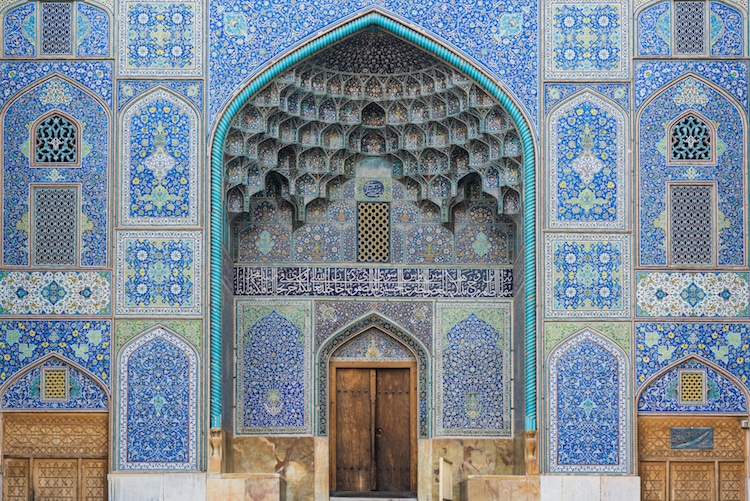
Consider the vaulted ceilings of Sheikh Lotfollah Mosque (the blue, Islamic architecture from the first blog post), the geometrical cutouts on a building façade. The first thing you notice is the explicit cutout. Instead of having a flat surface with an entrance, it caves in. It almost forcibly makes you aware of the negative space.

To truly understand an idea, I believe a first-hand experience is paramount. Now, I’ve never been to Sheikh Lotfollah Mosque nor any mosque for that matter. But, I can still analyze it as I envision in my mind. So, what’re the puzzle pieces I’m looking at, that I’m trying to solve? The first piece is very obvious. It’s the mosque itself. Specifically, it’s the ‘indoors’ of the mosque, permeated by the entrance gate. The second piece is actually not as obvious. It’s the ‘outside’. Immediately out of the mosque, there’s a raised platform, followed by a staircase, and a small park with few ponds. Collectively, let’s just call this ‘outdoors’ for now. Hence, the negative space created by the sculpted inset serves as linking space between indoors and outdoors. But, wait. So, it’s neither indoors nor outdoors?

It’s neither indoors nor outdoors.

Strictly speaking, you could argue that once you have carved a space to expose it to outside, it no longer is indoors. And, you’re absolutely right. But first, let’s move the conversation elsewhere. The continual use of this mosque as an example becomes difficult to analyze because majority of the population is not familiar with this type of architecture. Also, it’s likely that you nor I have been there. So, let’s take a step out and try to generalize this concept: the use of negative space between indoors and outdoors in other buildings. And what you’ll find is that, this concept is actually very common and found in just about every type of building all around the world.
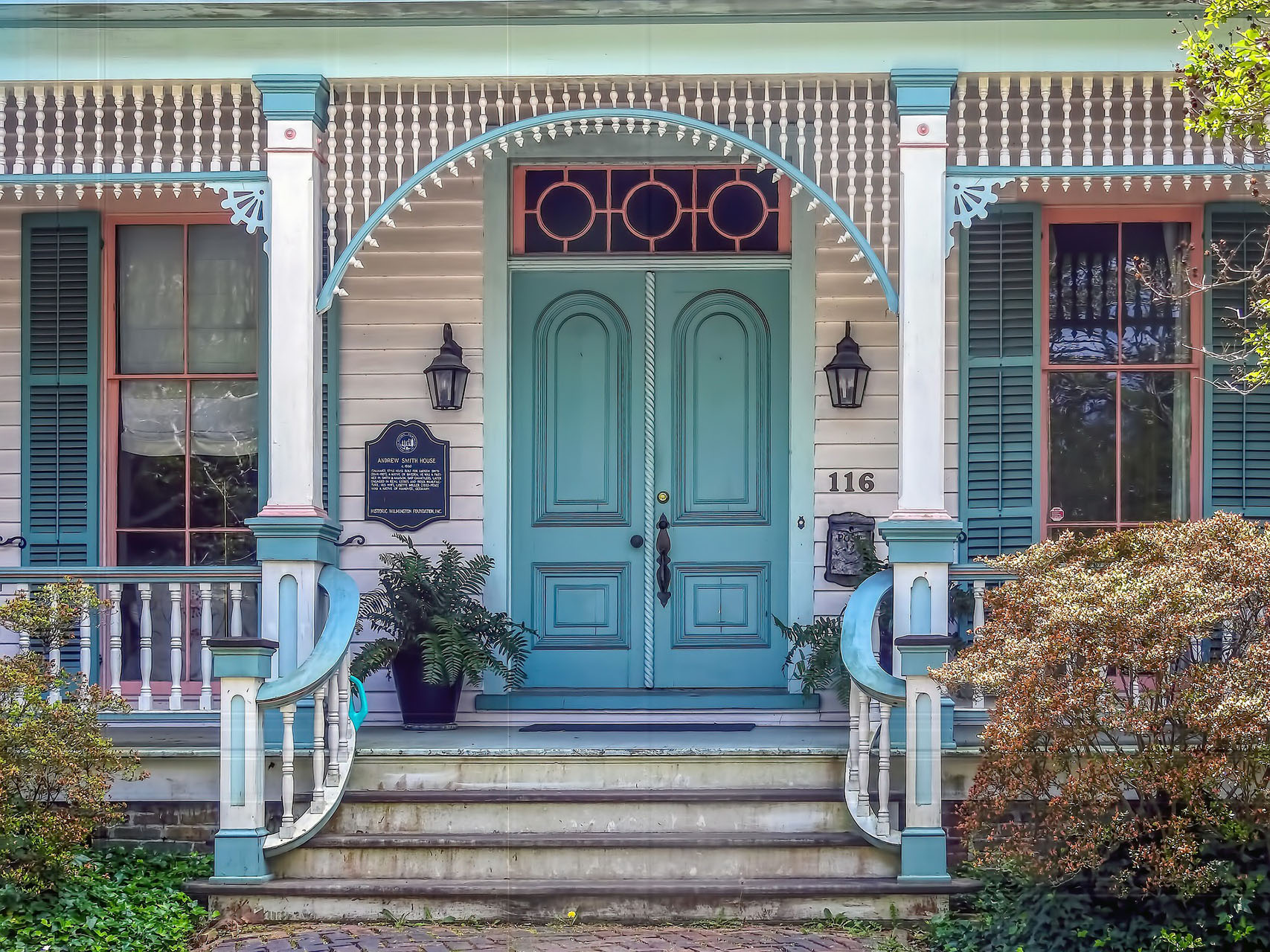
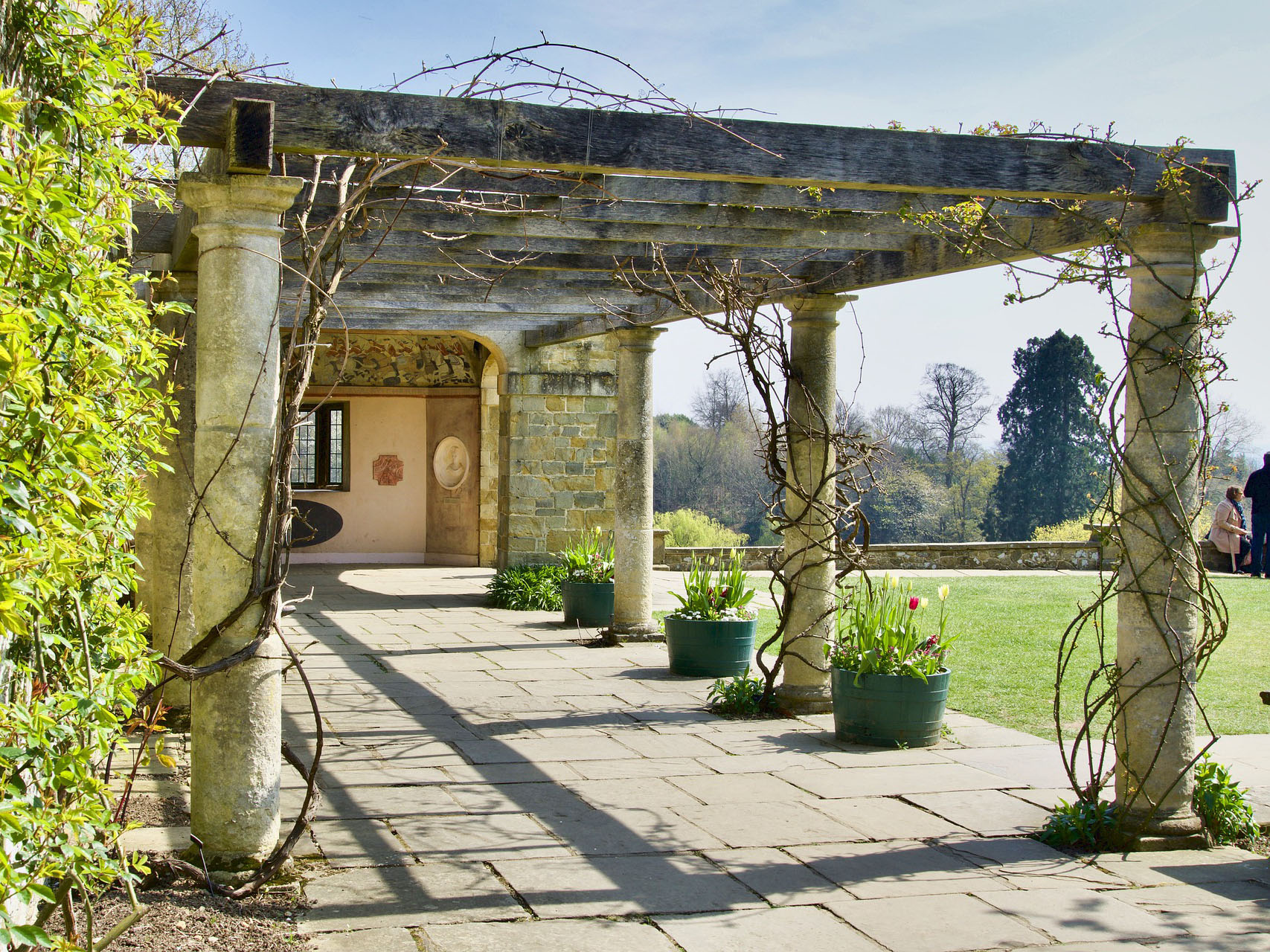
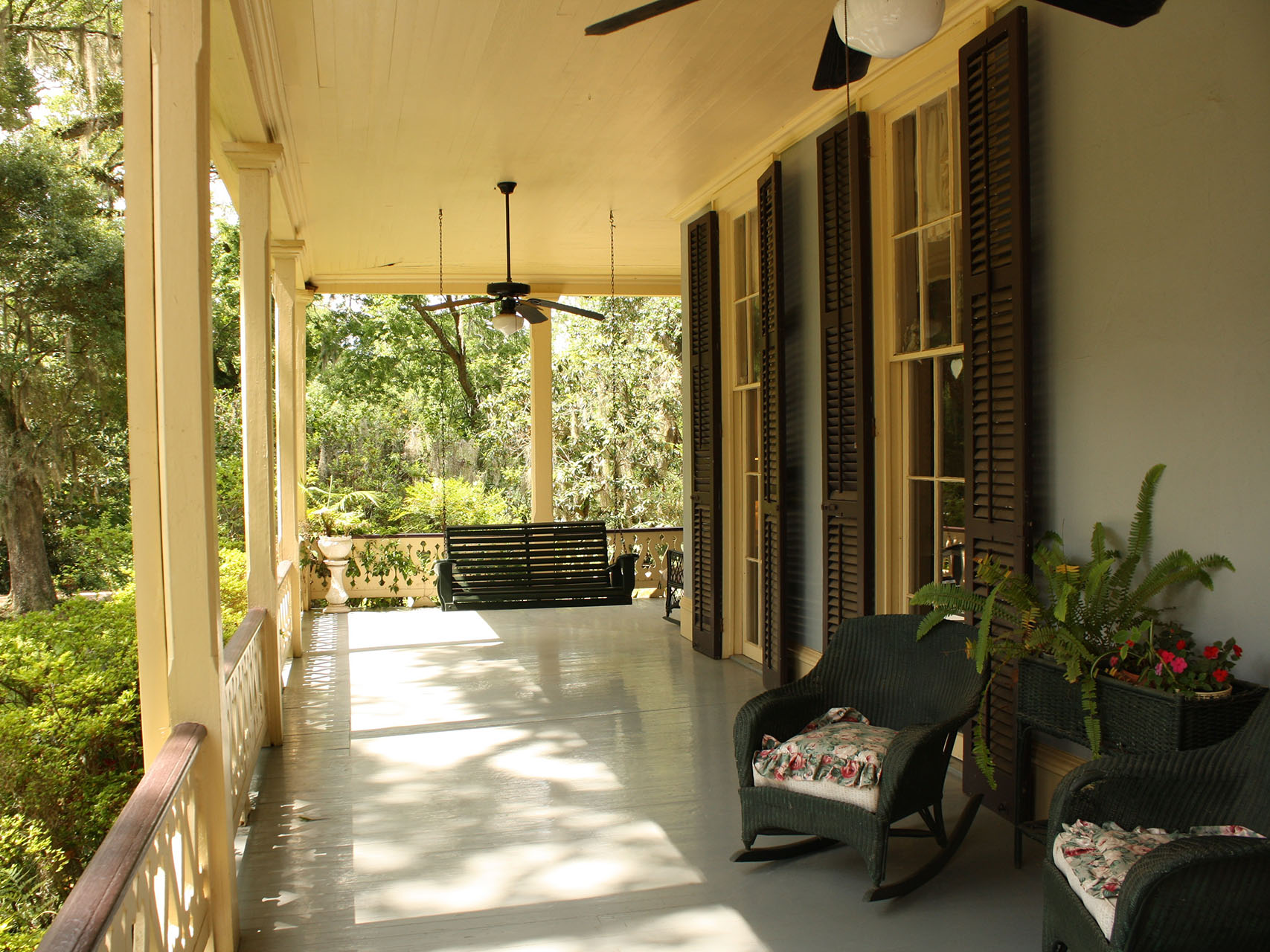
Porches, verandas, halls, and just about any motif that maintains a continuum of roof whilst technically beyond the entrance qualifies for the same function as described for the mosque. Their use may vary, such as reading a book on your porch. (It’d be inconvenient for others to pass through halls and the mosque gates if you decided to take a seat there to read a book. Some people will complain, even if you weren’t directly blocking the entrance. So, some spaces above may have different utilities that compound on top of the negative space discussed.) But, the qualifications that make the negative space in the mosque apply to these spaces as well.

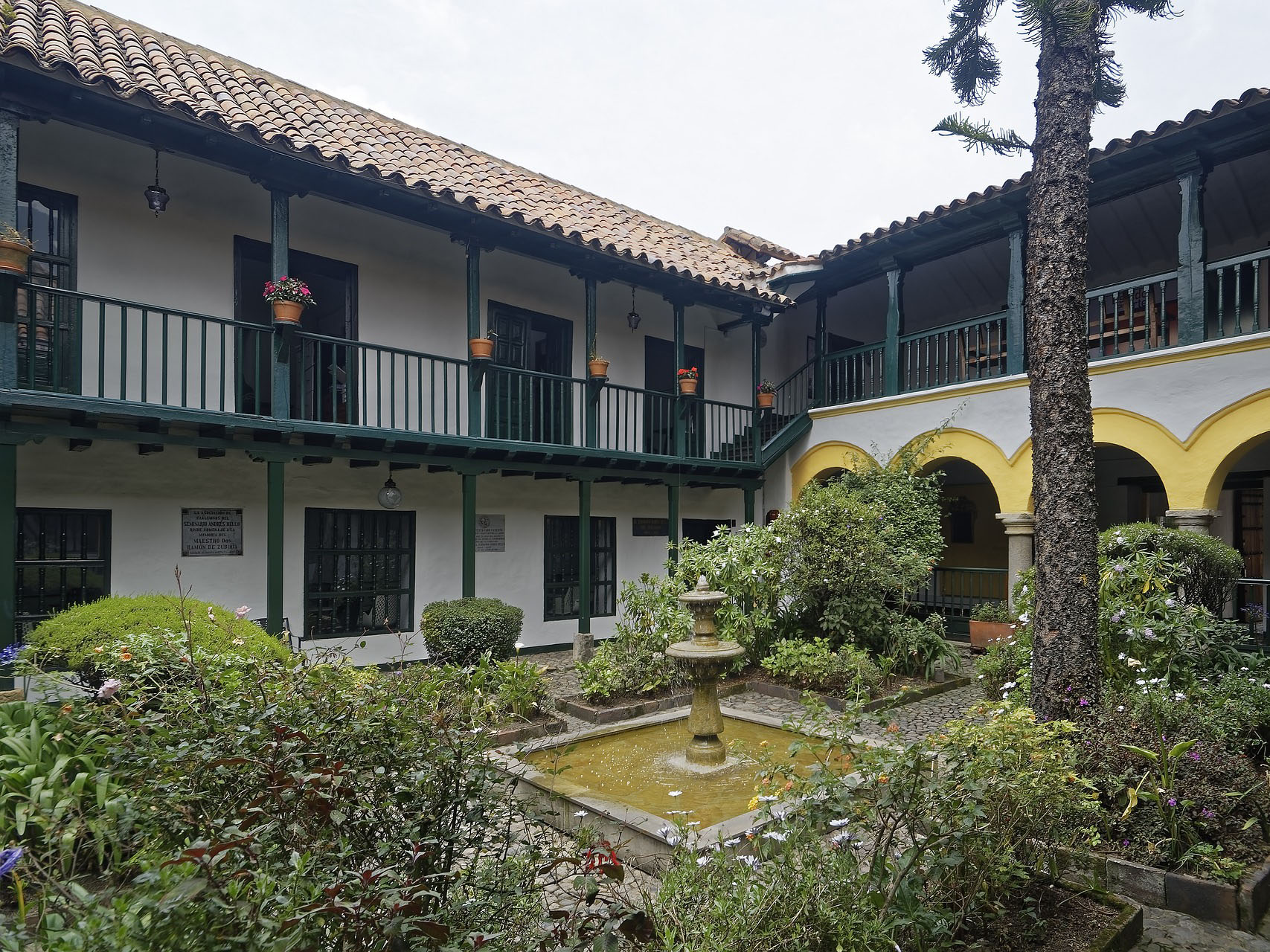
So, you can generalize the concept. It’s much familiar. Now, let’s think about how we refer to these spaces. And you’ll realize that it’s true that we will almost never assign these spaces as indoors in our everyday language. Your mother will say “It’s getting cold. Come back inside.” if you’re out on the porch reading a book in a Canadian October. “Come back inside” suggests that you’re ‘outside’. Here’s another example if you lived in an apartment complex (such as above). Your mailman is delivering your parcel, but you’re not home. He calls you up and asks where you want the package to be placed. You say, “Just leave it outside. It’ll be fine.” (Try formulating a conversation where someone refers to these spaces as ‘indoors’. It becomes very awkward.)

We naturally assign this type of space as ‘outside’. And, we should, because we can’t readily perceive negative spaces. All we can see are physical walls, doors, and windows that divide us from inside versus outside. And, it’s much more efficient to assign words based on this concrete percept in our language. (Whether our perceptual limits actively shape the language or our percept is consequential to the language we choose to speak is a curious question, however.) Functionally, it is an invisible bridge that serve to connect two parts of your local world (e.g. inside your house and your lawn). If we rid of our perceptual experiences, it should be neither indoors nor outdoors.

You can keep extending this train of thought and analyze it. So, our language has determined that whatever is outside of your walls and is exposed to outdoors is ‘outside’. But, what about spaces that make this definition very ambiguous? How about a courtyard within the house? Is it “He’s smoking in the courtyard” or “He’s smoking out in the courtyard”? You’re still within the bounds of the walls after all. You may say, the openness to the sky above makes it no longer shielded by a roof. Okay, so if I put a glass dome, it’s indoors then, right? Or how about the bell tower where you have to climb each noon to ring it? You’re no longer wall-bound, you’re exposed to the outside, but it feels more natural to say “He’s in the bell tower to ring the noon bell”. Or how about the car garage? This one is definitely indoors, right? But, let’s open that garage door and effectively remove one of the four walls. It now functions just like the mosque negative space. So, is it ‘indoors’ when the garage is shut and ‘outdoors’ when it’s open?

I don’t mean to bombard you with puzzles or seem cunning. I just want to share the importance of thinking about negative spaces. And, this isn’t specific to architecture or visual art. It’s the same for music, films, journalism, poems, books, and just about any medium we use to communicate. As long as there’s information made explicit through whatever medium, there’s information that has been made implicit. In journalism, words are essentially carrier of ideas. The person who’s written a newsletter has constructed a well-informed article. He/she has placed it somewhere in the world of ideas. You’ve come to visit this place, and so, you read the words to understand what is being explicitly said. You can, then, ‘read’ what is not being said. For example, let’s say the written piece is arguing for policy changes to fight climate change. It painstaking details the socio-economic disasters that are consequential to harsher climates: decreases in natural resource productions, famine, unprofitable tourisms, increases in wealth gap, unemployment, and so on. What it doesn’t say is the benefits of climate change. (Let’s be clear here that I’m not arguing against climate change.) It sounds absurd, I know. But, you should be able to ask the question nonetheless. Are there any benefits to climate change? Are there people that are likely not going to be affected by climate change? Are there people who’re actually going to profit from disasters? Who and what scenario does climate change work in favor for them? If you believe your cause is genuine, isn’t it also important to explore factors for disingenuity and try to eliminate it? Maybe there’s something there. Maybe there isn’t. But, I think it’s worthwhile exploring that option as well.

So it goes.
Minus White (pt. 2/3)

Read pt. 1/3 here.

In a visual medium, such as Renaissance fine art, the artist depicts positive and negative spaces by painting a scene where the main subject (often at the center) is surrounded by other people and objects. To be precise, paintings prior to modern era were largely agnostic to the concept of negative space. The best depiction of negative spaces were landscape paintings, but even then, many would have illustrations of people afar. Negative space wasn’t something that was formalized until the early 20th century when the Suprematist movement began during the World War 1.

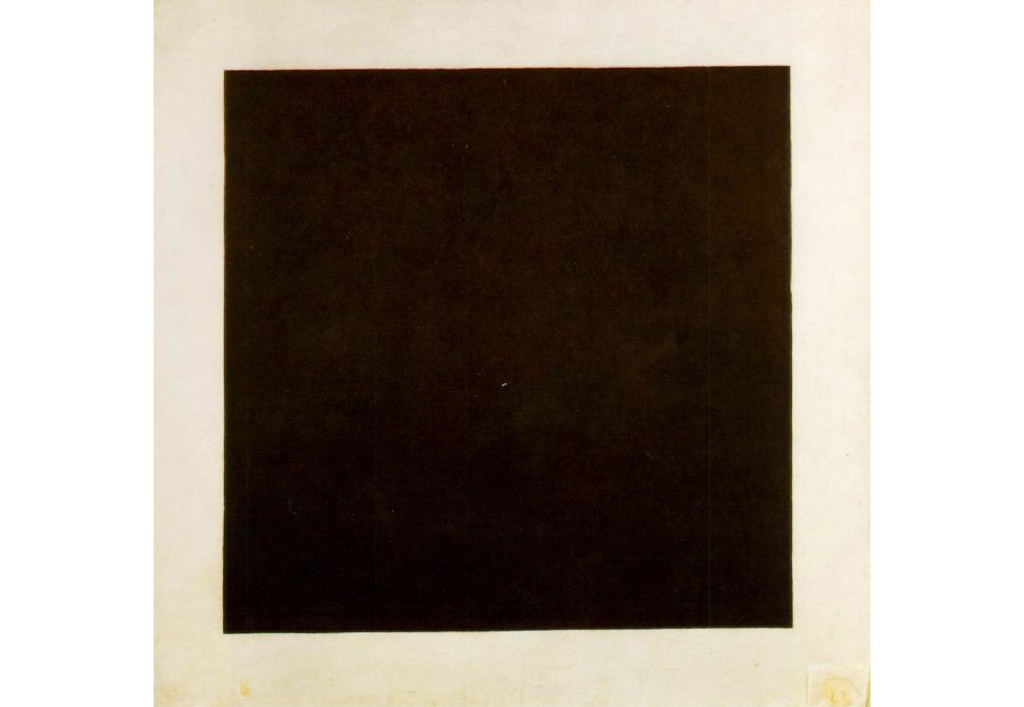
Kazimir Malevich – Black Square (1915)

I agree with many criticisms, especially from the public, that abstract art looks too haphazard, elementary, and/or sometimes feels too ‘cheap’, not unlike the wallpaper design you choose to plaster on your bathroom. Take the above painting by Kazimir Malevich. It could definitely be made into marble patterns to cover your floors. It’d be too ‘retro’ for my taste, but I’m sure it’d fit someone’s design wishes.

I empathetically agree because without context, abstract art is much more difficult to understand than its previous movements. And, while I love the modern and contemporary movements overall, I understand I’m in the minority that actively searches for the stories behind them. It’s not practical. But that doesn’t mean they (or some of them, at least) don’t deserve a place in our history. It can be just as rich as some of the classically acclaimed Baroque and Renaissance paintings.

Take the ‘Black Square (1915)’ by Kaimir Malevich (above) and his comments:

It is from zero, in zero, that the true movement of being begins.

I transformed myself in the zero of form and emerged from nothing to creation, that is, to Suprematism, to the new realism in painting – to non-objective creation.

[Black Square is meant to evoke] the experience of pure non-objectivity in the white emptiness of a liberated nothing.

Kazimir Malevich

To Kazimir Malevich, then-popular Impressionism and Cubism movements weren’t enough. Impressionism took a step in rejecting traditional objective reality and introduced us a dimension of subjective experiences by tempering color, texture, and perspective. While maintaining the same photographic composition as its predecessors, it transformed the same scenery of people and landscapes into impressions, or subjective reality. Cubism, basically, took it one step further and said, “That’s great, but why limit paintings to a single perspective?” They broke the reality down into elementary shapes and color, thereby reducing a point of reference. Hence, a Cubist painting often has no depth of field, the subjects are largely distorted, and its colors are exaggerated. But, for Suprematists, it could go even further. They replied, “True subjective experience is the manifestation of your thoughts and feelings, unadulterated by worldly perceptual inputs. Subjective experiences should ultimately be devoid of objects.”

Focusing on the negative space.

That’s essentially the philosophy of Suprematism and few other movements that built on top of it, such as De Stijl (e.g. Piet Mondrian), Abstract Expressionism (e.g. Jackson Pollock), and Minimalism (e.g. Cy Twombly).

Kazimir Malevich wanted to reveal and make known what lies beyond our perceptual experiences. The focus on negative space isn’t to rid of all objects, but be mindful of the other ‘half’. And, I think it’s a great message. It’s important to be mindful of negative space because when you rid of all ‘objects’ (or any perceptual experiences, although practically impossible), that’s where the true subjective experience lies. However, it’s equally important to consider that they’re complementary and one can’t exist if the other ceases.

This brings me to the classical “Is the cup half-full or half-empty?” question.

Continue to pt. 3/3.

Minus White (pt. 1/3)

This is the 4th blog that I’ve started. The first one was back in 2009 on Blogspot named ‘Broken Human Telephones’. It no longer exists. The second one was again hosted on Blogspot and ran between 2009 and 2014 (yes, the first one was very short-lived). ‘Minus White’, my second blog, is still alive, albeit the fact Photobucket stopped hosting my pictures so most of them have a large Photobucket watermark on them. And, the third one was hosted with a purchased domain name that never actually saw the light of day – not even a single post. I stopped the domain service eventually and the website was taken down. So, technically, this is my 4th blog. The 3rd one was empty though.

Anyway, the goal of having a website for me is quite simple. I want a writing space that I can air out some thoughts, work out a riddle, or just explore ideas. I want it to be public to keep myself more grounded and better stress-test my journey of thought. I’ve aptly named this site ‘Minus White’ again. I’ll explain why. If you consider a jigsaw puzzle, for example, you have one (or more) puzzle pieces of interest at a given time. What’s missing are the pieces in the space between – the linking piece(s). I think of this space being white. And, in the process of trying to connect the pieces, what I envision doing is filling them. Hence, ‘Minus White’.

There’s a bit more to it though.

The title ‘Minus White’ is a reference to the concept of negative space. In architecture, negative spaces are created by hollowing out a solid that already exists. A window is a negative space. A vaulted ceiling is a negative space. A fireplace is a negative space. A room is a negative space. You get the point. What’s not obvious is negative spaces, by definition, are accompanied by positive spaces. After all, a space only exists within the confounds of its frame, that frame being a positive space. The window frame, ceiling or a roof, bricks that surround the firepit, and the walls that enclose your room are all positive spaces.

Take a look at this Islamic mosque vaulted ceiling, called muqarnas. Isn’t it absolutely gorgeous?

Source: Google
Sheikh Lotfollah Mosque, Iran (1619)

Now, how does this relate to ‘Minus White’ and my modest ambition to create another verbose monologues on the Internet (a.k.a. blog)? It’s my conceptual attempt to be mindful of negative spaces. Positive spaces are often more explicit and tangible. They are much ‘louder’, and they easily draw our attention. However, a positive space in architectural motif lends itself to its complementary negative space. It has to. And, to fully experience architecture like the mosque above, you need to understand both.

When experiencing architecture, which is any time you’re near a building, we first see positive spaces in the form of its walls, columns, window shapes and sizes, doors, stairs, and so on. We only experience negative spaces by occupying the space. Negative space is not something you visualize without a conscious effort. Rather, you feel it. After all, what use would thinking about the negative space created by a staircase help you get to the lower floor? You’re busy looking at the actual staircase so your foot doesn’t miss a step. On the other hand, if you were simply passing by a staircase, you wouldn’t know how frustrating it would be to climb down that staircase because the damned architect was adamant about a spiral staircase in such a small space, lending to unwalkable, steep, and narrow step towards the center. The staircase looks beautiful from afar, however. Definitely Instagram-worthy.

You can look through photographs of mosques and remark at the details of their vaulted ceilings. But, you won’t be able to experience them until you’re in their presence. And, of course, a mosque is a complex building with many geometrical shapes, patterns, edges, sides, walls, columns, windows, ornaments, and so on. Negative space connects each individual elements to ‘tell’ a comprehensive outlook. Hence, careful study of each space types and their relationships are crucial for holistic understanding of an architectural piece. I think same is true for writing, painting, music, film, and just about any form of art.

Continue to pt. 2/3.